What Is Affiliate Marketing and How Does It Actually Work?
Heads up: this post may contain affiliate links. If you buy through them, I may earn a commission at no extra cost to you. I only recommend what I’d use myself. Full disclosure
If you’ve spent any time researching ways to make money online, you’ve almost certainly heard the term affiliate marketing. It gets thrown around a lot — sometimes in a way that makes it sound like some kind of secret, and other times like it’s the easiest thing in the world. The truth, as usual, is somewhere in between. Affiliate marketing is one of the most legitimate, proven, and accessible ways to build an income online, but it helps to understand exactly how it works before you dive in.
The Simple Definition
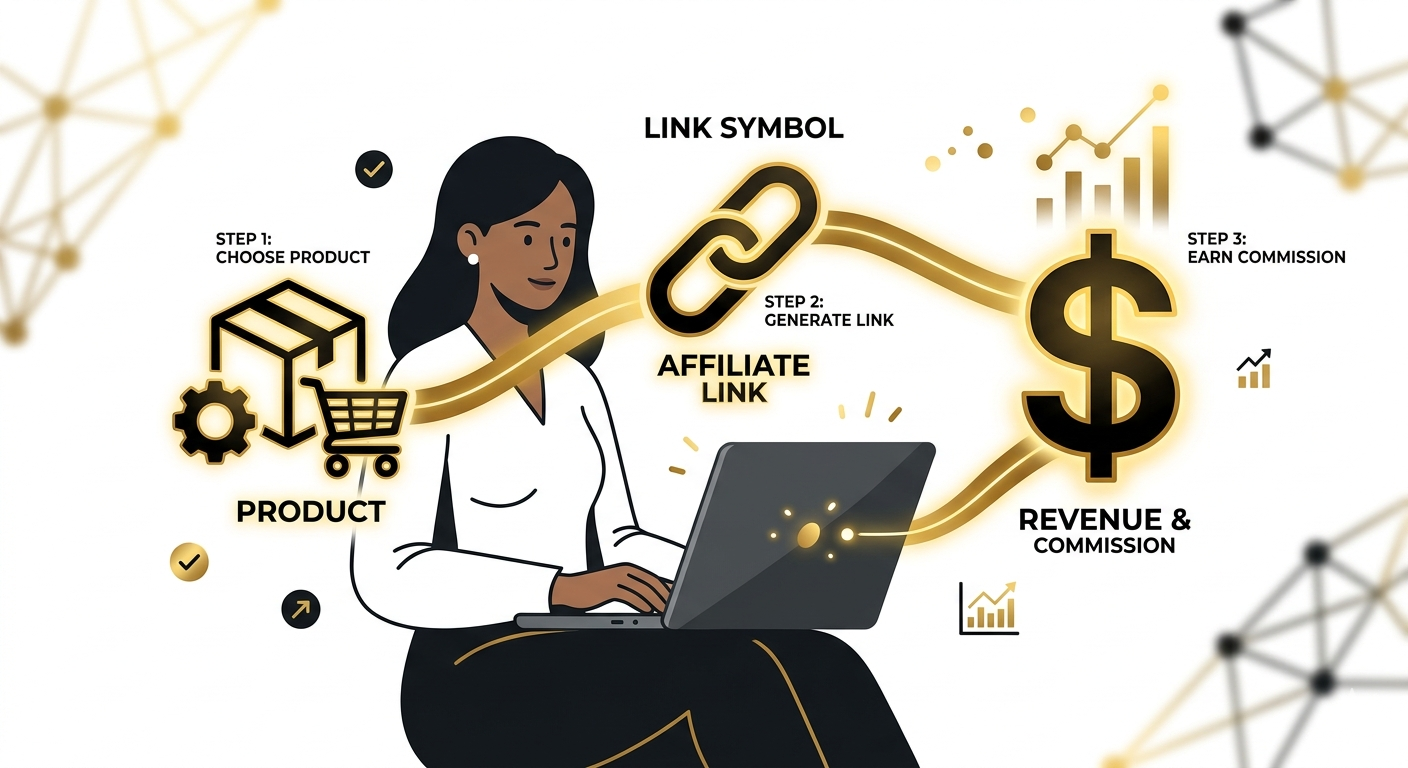
At its core, affiliate marketing is a performance-based business model where you earn a commission for recommending someone else’s product or service. You don’t create the product. You don’t handle customer service. You don’t deal with refunds or fulfillment. Your job is simply to connect the right people with the right product — and when they buy, you get paid.
Think of it like being a referral agent. If a friend asks you where to get a great haircut and you send them to your stylist, wouldn’t it be nice if the stylist slipped you a few bucks for the referral? That’s essentially what affiliate marketing is — except it’s automated, scalable, and can happen while you’re sleeping.
How the Process Works
The mechanics of affiliate marketing are straightforward once you see them laid out:
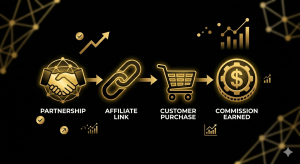
- You join an affiliate program. Most companies — from Amazon to software companies to digital course creators — have affiliate programs. You apply, get approved, and receive a unique tracking link.
- You share that link. This could be in a blog post, a YouTube video, an email to your list, or on social media. The link is tied specifically to you.
- Someone clicks your link and makes a purchase. The affiliate platform tracks that click and attributes the sale to you.
- You earn a commission. Depending on the program, this could be anywhere from a few percent to 50% or more of the sale price.
The entire process is tracked automatically through cookies and affiliate software, so there’s no manual counting or guesswork involved.
The Key Players in the Affiliate Ecosystem
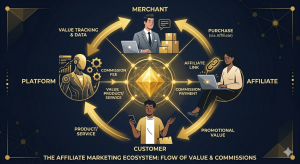
To fully understand affiliate marketing, it helps to know who the major players are:
- The Merchant — This is the company or individual who created the product. They set up the affiliate program and define the commission structure.
- The Affiliate — That’s you. You promote the merchant’s product and earn a commission on sales you generate.
- The Customer — The person who ultimately buys the product through your recommendation.
- The Affiliate Network or Platform — Many programs are managed through third-party platforms like ClickBank, JVZoo, WarriorPlus, or Amazon Associates. These platforms handle the tracking, reporting, and payments so everything runs smoothly.
Why Affiliate Marketing Is Such a Powerful Model
There are a lot of ways to make money online, so why does affiliate marketing remain one of the most popular? A few reasons stand out:
- Low barrier to entry. You don’t need to create a product, build a customer service team, or invest a lot of money upfront. You can start with a free blog or social media account and a handful of affiliate links.
- Unlimited earning potential. Because it scales — the same blog post or YouTube video can generate commissions for months or years without any additional effort from you.
- Flexibility. You can promote products in virtually any niche, on any platform, at any time. There’s no schedule, no boss, and no geographic limitation.
- It complements everything else. Affiliate marketing can run alongside a course business, a coaching practice, a YouTube channel, or a blog. It doesn’t compete with your other income streams — it enhances them.
What Affiliate Marketing Is Not
It’s worth clearing up a few misconceptions, because there’s a lot of noise out there:
Affiliate marketing is not a get-rich-quick scheme. It takes time to build an audience, earn trust, and generate consistent commissions. Anyone promising overnight results is selling you something you don’t need.
It’s also not passive from day one. The “passive income” part kicks in once you’ve done the work — once your content is published, your email list is built, and your audience trusts your recommendations. Until then, it’s active work that builds toward passive results.
Getting Started: What You Actually Need
The good news is that you don’t need much to get started. Here’s a basic starter framework:
- Choose a niche — Pick a topic you understand and that has products people actually buy.
- Join an affiliate program — Start with something like Amazon Associates, ClickBank, or a program specific to your niche.
- Create content — A blog, YouTube channel, or email newsletter where you can share your recommendations naturally.
- Drive traffic — Get people to see your content through SEO, social media, or email marketing.
- Track and optimize — Pay attention to what’s working and do more of it.
That’s the foundation. Everything else — paid traffic, advanced funnels, high-ticket programs — is built on top of these basics.

The Bottom Line
Affiliate marketing works because it’s built on a simple, honest premise: recommend products you believe in, help people make good decisions, and earn a commission for your effort. It’s not magic, and it’s not mysterious. It’s a real business model that millions of people around the world use to generate income online — from a few hundred dollars a month all the way to life-changing revenue.
If you’re just getting started, there’s never been a better time. The tools are better, the platforms are more accessible, and the opportunity is bigger than ever.
Ready to take the next step? Join the Profit With Bob email list and get weekly tips, strategies, and resources delivered straight to your inbox — no fluff, just actionable content that helps you build real income online. [Subscribe here.]