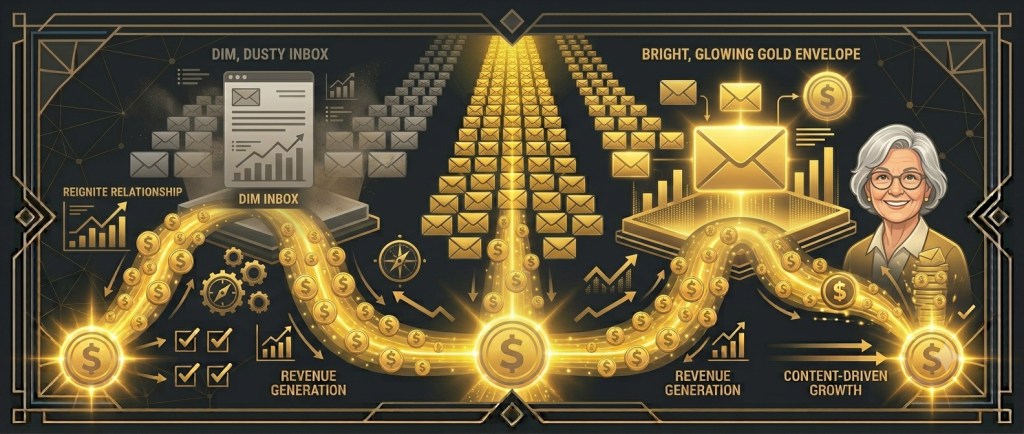

How to Reactivate a Dead or Unresponsive Email List
It happens to almost every email marketer eventually. You built a list — maybe slowly and carefully over months, maybe quickly through a promotion or lead generation campaign — and at some point, for whatever reason, the communication stopped. Life got busy. The business pivoted. A launch consumed all your attention and the regular emails fell away. Or perhaps you’ve been emailing consistently but the engagement has quietly deteriorated — open rates declining, click rates shrinking, the list growing larger while somehow feeling less alive.
Whatever the reason, you’re now looking at a list of subscribers who haven’t heard from you in weeks, months, or longer — and wondering whether there’s anything worth salvaging, and if so, how to go about doing it without making things worse.
The good news is that a dormant or unresponsive email list is not a dead one. Subscribers who have gone quiet are not necessarily gone — they may simply be waiting for a reason to re-engage. The right reactivation approach can recover a meaningful percentage of lapsed subscribers and restore a list to genuine health and profitability. The wrong approach — blasting a cold list with aggressive promotions or pretending the silence never happened — can permanently damage what’s left of the relationship.
This post is going to give you a clear, practical framework for reactivating a dormant or unresponsive email list the right way.
Understanding Why Lists Go Cold
Before developing a reactivation strategy, it helps to understand the common reasons lists go cold in the first place — because the cause often informs the cure.
Inconsistent communication is the most common culprit. Subscribers who opted in expecting regular value and then heard nothing for weeks or months naturally disengage. The relationship they signed up for never materialized, and their attention moved elsewhere. Reactivating these subscribers requires acknowledging the gap and demonstrating that consistent communication is now a priority.
Irrelevant content is the second most common cause. Subscribers who receive content that doesn’t match what they were expecting when they opted in — or whose needs have shifted since they joined — gradually stop engaging even if they don’t unsubscribe. Reactivating these subscribers requires reconnecting with their current situation and demonstrating renewed relevance.
List decay over time is a natural process that affects every email list regardless of how well it’s managed. Email addresses change. People leave jobs, switch providers, or simply evolve beyond the interests that brought them to your list originally. A certain amount of list decay is inevitable — and the goal of reactivation is not to reverse it entirely but to identify and recover the engaged subscribers worth keeping while gracefully releasing those who are genuinely gone.
Technical deliverability issues can also cause apparent disengagement that isn’t actually a subscriber behavior problem at all. If your emails have been landing in spam folders or promotions tabs rather than primary inboxes, open rates will plummet despite no change in subscriber interest. Before launching a reactivation campaign, it’s worth running a basic deliverability audit to rule out technical causes for low engagement.

Step 1: Segment Your List Before Doing Anything
The first step in any effective reactivation strategy is segmentation — identifying specifically which subscribers are inactive and for how long, so you can treat different levels of inactivity with appropriately calibrated approaches.
A useful segmentation framework divides your inactive subscribers into three groups:
Mildly inactive — subscribers who haven’t opened an email in 60 to 90 days. These are the easiest to reactivate because the relationship hasn’t had as much time to cool. A relatively gentle reactivation approach works well here.
Moderately inactive — subscribers who haven’t engaged in 90 to 180 days. A more deliberate reactivation sequence is appropriate, with a stronger hook and a more compelling reason to re-engage.
Deeply inactive — subscribers who haven’t opened anything in 180 days or more. These require your strongest reactivation effort, and you should be prepared for a lower recovery rate. For this segment, a direct “are you still there?” approach combined with a genuine incentive is most likely to produce results.
Most email marketing platforms make this segmentation straightforward through their engagement filtering tools. Spend twenty minutes building these segments before writing a single reactivation email — because targeting matters at least as much as messaging.
Step 2: Write a Re-Engagement Email That Acknowledges Reality
The opening email of your reactivation campaign needs to do something that most marketing emails never do — acknowledge the elephant in the room.
If you’ve been absent, say so. If communication became inconsistent, own it. Subscribers can tell when they’re being handled with a form letter, and a reactivation email that pretends no time has passed is one of the surest ways to trigger the unsubscribe response you’re trying to avoid.
A genuine, human acknowledgment of the gap — brief, direct, and without excessive self-flagellation — does something powerful. It signals authenticity. It treats the subscriber as an adult who deserves honesty rather than a marketing target who needs to be manipulated back into engagement. And it creates a moment of real connection that form letters never can.
Here’s the basic structure that works for a re-engagement opening email:
Lead with honesty. Acknowledge that it’s been a while — and that you recognize it. “I know it’s been a while since you’ve heard from me” is a more effective opening than any subject line trick.
Take responsibility without dwelling on it. A brief acknowledgment is appropriate. A lengthy apology is not. Say it, own it, and move forward.
Remind them why they joined. Reconnect the subscriber with the reason they opted in originally — the problem they were trying to solve, the goal they were working toward, the value they were promised. That reminder reactivates the original motivation that brought them to your list.
Deliver immediate value. Don’t ask for anything in the first re-engagement email. Give something genuinely useful — a tip, a resource, an insight — that demonstrates immediately that re-engaging with you is worth the subscriber’s time.
Preview what’s coming. Give a brief, specific preview of what subscribers can expect going forward — and make it compelling enough that staying subscribed feels worthwhile.

Step 3: Build a Short Reactivation Sequence
A single re-engagement email is rarely enough to fully reactivate a cold list. A short sequence of three to five emails, spaced two to three days apart, gives you multiple touchpoints to demonstrate renewed value and rebuild the relationship before asking for any form of commitment or purchase.
Here’s a framework for a five-email reactivation sequence:
Email 1 — The Honest Return The opening email described above. Acknowledge the gap, take responsibility, deliver immediate value, preview what’s coming.
Email 2 — Your Best Content Your single most valuable piece of content — a blog post, a tutorial, a strategy — delivered with no strings attached. The goal of this email is to demonstrate, through the quality of what you share, that re-engaging with your content is genuinely worth the subscriber’s time and attention.
Email 3 — The Relevant Offer A soft, relevant offer — an affiliate recommendation or your own product — presented in the context of solving a specific problem your subscribers are likely facing. Not a hard sell. A helpful recommendation from someone who is re-establishing their credibility and demonstrating that their recommendations can be trusted.
Email 4 — The Story A personal story that reconnects the subscriber with you as a human being rather than a marketing entity. Stories build empathy and emotional connection that content and offers alone cannot produce. Choose a story that is relatable, relevant, and that bridges naturally to the value you provide.
Email 5 — The Direct Ask The final email in your reactivation sequence asks directly whether the subscriber still wants to hear from you. This sounds counterintuitive — why give subscribers permission to leave? — but it serves two important purposes. It demonstrates respect for the subscriber’s inbox and their right to choose what’s in it. And it produces a list of actively re-confirmed subscribers whose engagement going forward is significantly higher than the passive remainder of your list.
A subject line like “Should I keep sending you emails?” or “Do you still want to hear from me?” generates surprisingly high open rates — because the directness and honesty of the question stands out dramatically in an inbox full of promotional messaging.

Step 4: Handle Non-Responders Decisively
After your reactivation sequence is complete, you’ll have two groups of subscribers — those who re-engaged in some form, and those who didn’t respond to any of your attempts.
The re-engaged subscribers move back into your regular email flow. They’ve demonstrated renewed interest and deserve to be treated as active, valued members of your list going forward.
The non-responders require a decision. Most email marketing best practices recommend sending one final email to non-responders — a genuine farewell message that tells subscribers you’re removing them from the list unless they choose to stay. Something like “I’m cleaning up my list and I don’t want to remove you if you still want to hear from me — click here to stay subscribed” gives genuinely interested subscribers a final opportunity to re-confirm before you remove them.
Then remove the non-responders who don’t respond to the farewell email. This decision can feel uncomfortable — especially if it means removing a significant portion of your list. But a smaller list of genuinely engaged subscribers is worth dramatically more — in open rates, click rates, deliverability reputation, and revenue — than a larger list padded with disengaged contacts who are actively dragging down every metric you care about.
List hygiene is not a nice-to-have. It is a core email marketing practice that directly affects the health and profitability of everything you send.
Step 5: Prevent It From Happening Again
The most important outcome of a reactivation campaign is not the subscribers you recover — it’s the habits and systems you put in place to prevent another cold list from developing in the future.
After your reactivation campaign, implement the following:
Establish and maintain a consistent broadcast schedule. Pick a frequency — weekly at minimum — and honor it without exception. Consistency is the single most effective prevention against list decay.
Set up an automated re-engagement trigger. Configure your email platform to automatically tag or segment subscribers who haven’t opened an email in 60 days, and set up a short automated re-engagement sequence that triggers for those subscribers before they fall into deeper inactivity. This proactive approach prevents the problem from compounding over time.
Monitor your engagement metrics monthly. Open rates, click rates, and unsubscribe rates are the vital signs of your list health. Review them monthly and act on what they tell you rather than waiting until the problem has become severe.

The Bottom Line
A cold or unresponsive email list is a problem worth solving — but it requires the right approach. Honest acknowledgment, genuine value delivery, a structured reactivation sequence, decisive handling of non-responders, and a firm commitment to the consistent communication habits that prevent the problem from recurring.
The subscribers worth keeping will respond to authenticity and renewed value. The ones who don’t were never going to generate meaningful results regardless. Reactivate the first group. Release the second. And build the habits that ensure you never need to run a reactivation campaign again.
Ready to build an email list that stays warm, engaged, and profitable from day one? Join the Profit With Bob newsletter for weekly strategies on email marketing and online business building — delivered consistently, without fail. [Subscribe here.]