The Anatomy of a High-Converting Marketing Email
Heads up: this post may contain affiliate links. If you buy through them, I may earn a commission at no extra cost to you. I only recommend what I’d use myself. Full disclosure
The Anatomy of a High-Converting Marketing Email
There is a meaningful difference between an email that gets opened, skimmed, and forgotten — and one that gets opened, read completely, and acted upon. That difference is not luck. It is not the size of your list. It is not even the quality of the offer you’re promoting. It is the construction of the email itself — the specific elements that work together to move a reader from passive recipient to active participant.
Understanding the anatomy of a high-converting marketing email is one of the most valuable skills you can develop as an online business owner. It applies to every email you send — promotional broadcasts, affiliate recommendations, product launches, re-engagement campaigns, and everything in between. Master the components, understand why each one works, and you’ll have a framework you can apply to every email you write for the rest of your career.
Let’s break it down.
Element 1: The Subject Line — The Only Job Is to Get the Open
The subject line is the most important single element of any marketing email — not because it closes sales or builds relationships, but because without it doing its job, none of the other elements ever get a chance to work. If your email doesn’t get opened, it doesn’t exist.
The subject line has one job: to compel the recipient to open the email. Nothing more, nothing less.
What makes a subject line work? Several factors consistently separate high-open-rate subject lines from the ones that get ignored:
Curiosity is the most powerful driver of opens. A subject line that creates an information gap — that hints at something interesting or valuable without fully revealing it — triggers an almost involuntary desire to find out more. “The mistake most affiliate marketers make on day one” creates more curiosity than “How to avoid affiliate marketing mistakes.”
Specificity adds credibility and relevance. “How I generated 47 new subscribers last Tuesday” is more compelling than “How to grow your email list” because the specificity makes the claim feel real and the result feel achievable.
Personalization — even something as simple as the subscriber’s first name in the subject line — has been shown to meaningfully improve open rates. Most email platforms make this easy to implement with a simple merge tag.
Brevity matters more than ever as the majority of emails are now opened on mobile devices. Subject lines that display fully in a mobile preview — roughly forty to fifty characters — perform better than longer ones that get cut off.
Avoiding spam triggers is also essential. Words and phrases like “free money,” “guaranteed,” “act now,” “limited time offer,” and excessive capitalization or exclamation points can land your email in the spam folder before it ever gets a chance to be seen.
Element 2: The Preview Text — The Subject Line’s Silent Partner
Most email clients display a short snippet of preview text alongside the subject line — visible in the inbox before the email is opened. This preview text is real estate that a surprising number of email marketers completely ignore, defaulting to whatever the first line of their email happens to be.
That’s a missed opportunity. Your preview text is essentially a second subject line — another chance to create curiosity, reinforce relevance, or add a compelling detail that tips a hesitant reader toward opening.
Think of the subject line and preview text as a team. The subject line makes the first impression. The preview text closes the deal. Together, they should create enough combined pull to make opening feel like the obvious next move.
For example:
- Subject: “The mistake most affiliate marketers make on day one”
- Preview: “I made it too — here’s what it cost me and how to avoid it”
The preview text adds context and emotional resonance that the subject line alone couldn’t fit. Used well, it can meaningfully lift your open rates without changing a single word of your actual email content.
Element 3: The Opening Line — Hook Them in the First Sentence
Once your subscriber opens your email, you have approximately three to five seconds to convince them it was worth doing. The opening line is where that decision gets made.
The worst opening lines are the ones that delay getting to the point. “I hope this email finds you well.” “I wanted to reach out and share something exciting.” “As you may know, building an online business requires consistent effort.” These openers signal to the reader that nothing interesting is coming anytime soon — and in a world of overflowing inboxes, that signal is enough to trigger the close button.
The best opening lines do one of several things immediately. They make a bold, specific claim. They open a loop that demands closure. They speak directly to a pain point the reader is experiencing. They tell the first sentence of a story the reader wants to finish. Or they ask a question the reader can’t help answering mentally.
The goal is to make stopping feel harder than continuing. A reader who makes it past your opening line is a reader who will almost certainly read the rest of your email — because the decision to continue has already been made.

Element 4: The Body — One Idea, Clearly Delivered
The body of a high-converting marketing email follows a principle that most beginning email writers violate constantly: one email, one idea.
The instinct to pack multiple topics, multiple offers, multiple value points, and multiple calls to action into a single email is understandable — it feels efficient. But it consistently underperforms compared to emails that focus on a single thread from opening line to call to action.
When a reader encounters multiple ideas or offers in a single email, their attention dilutes across all of them and converts on none of them. A focused email that takes one idea and develops it clearly and compellingly — building momentum toward a single, obvious conclusion — converts dramatically better than a multi-topic broadcast that tries to cover everything at once.
The body should also be scannable. Short paragraphs of two to three sentences maximum. White space between sections. Bold text used sparingly to highlight key points. Bullet points for lists of three or more items. Most people don’t read marketing emails word for word — they scan for relevance and value, and then read more carefully when they find it. Format your emails to reward that scanning behavior rather than fight against it.
Write in a conversational tone that matches how you speak rather than how a corporate communications department writes. Contractions, sentence fragments, direct address — all of these make an email feel personal and readable rather than formal and distant. Your subscribers want to hear from a human being they trust, not a brand voice that could have been written by a committee.
Element 5: The Story — The Most Powerful Persuasion Tool in Email
If there is one single element that separates good marketing emails from great ones more consistently than any other, it is story.
Stories work in marketing email for the same reason they’ve worked in human communication for thousands of years — they engage the brain in a fundamentally different way than information alone. A story creates an emotional experience. It generates empathy, curiosity, and investment in the outcome. And crucially for marketers, it allows readers to see themselves in the narrative — to imagine experiencing the transformation the story describes.
You don’t need elaborate, multi-episode narratives to harness the power of story in email. Even a brief two or three paragraph anecdote — a specific moment from your experience, a client result, a relatable struggle — can transform an otherwise ordinary email into one that resonates deeply and converts at a much higher rate.
The most effective story structure for marketing email is simple. Set the scene with a specific situation or struggle. Introduce the complication or challenge. Describe the resolution or insight. And bridge naturally to the relevance for the reader and the point of the email. That four-part structure can be executed in four short paragraphs — and it is more persuasive than pages of feature-benefit copy delivered without narrative context.

Element 6: The Call to Action — One Ask, Clearly Made
The call to action is where conversion happens — or doesn’t. It is the point at which you ask your reader to do something specific, and everything in the email has been building toward it.
The most common call-to-action mistake in marketing emails is the same as the most common body mistake: asking for too many things. Multiple links, multiple offers, multiple next steps — they fragment the reader’s attention and reduce the probability that any single action gets taken. Research consistently shows that emails with a single, clear call to action outperform emails with multiple competing links.
Your call to action should be specific about what you’re asking the reader to do. “Click here” is weak. “Read the full review and see if it’s right for you” is specific and benefit-oriented. “Grab your spot before the cart closes tonight” adds urgency. The more clearly your CTA communicates what happens when the reader clicks and why they should want to click, the higher your conversion rate will be.
Placement matters too. Your primary call to action belongs in the natural reading flow of the email — not buried at the very bottom where only the most committed readers will ever reach it. A second, briefer mention of the same CTA at the end of the email can capture readers who skimmed to the bottom before reading. But both should point to the same single destination.
Element 7: The Signature — Reinforce the Human Connection
The signature is the small but meaningful closing element that reminds your subscriber they’re in a relationship with a real person. A simple, consistent signature — your name, perhaps your title or a brief tagline, and a warm closing line — reinforces the personal nature of the communication and leaves the reader with a positive final impression.
Avoid over-engineering your email signature with excessive graphics, multiple links, and elaborate formatting. The goal is warmth and humanity, not a billboard. Something as simple as “Talk soon, Bob” followed by your name and a one-line reminder of what you stand for is more effective than a heavily designed signature block that screams “corporate marketing template.”
Putting It All Together
Here is the complete anatomy of a high-converting marketing email in summary:
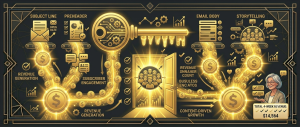
A subject line that creates curiosity, specificity, or both — and compels the open. Preview text that reinforces or extends the subject line’s appeal. An opening line that hooks the reader immediately and makes continuing feel inevitable. A body focused on a single idea, written conversationally, formatted for scanability. A story — even a brief one — that creates emotional engagement and makes the point memorable. A single, specific call to action that tells the reader exactly what to do and why they should do it. And a signature that closes with warmth and human connection.
Each element serves a specific purpose. Each one builds on the ones before it. And when all seven work together effectively, the result is an email that doesn’t just get opened — it gets read, remembered, and acted upon.
The Bottom Line
Writing high-converting marketing emails is a learnable skill. It is not a mysterious talent reserved for people who have been doing this for decades. It is a craft — a set of principles and techniques that can be studied, practiced, and improved over time.
Study the emails you love receiving. Identify what makes them work. Apply those principles to your own writing. Test, review your results, and refine. Do that consistently over time and your email marketing will become one of the most powerful — and profitable — tools in your entire online business.
Before you buy another money-making program, get the free Screenshot Reality Check: seven questions to ask first, plus a short video lesson on what income screenshots leave out. No hype.