How Often Should You Email Your List? The Real Answer
Heads up: this post may contain affiliate links. If you buy through them, I may earn a commission at no extra cost to you. I only recommend what I’d use myself. Full disclosure
How Often Should You Email Your List? The Real Answer
Ask ten experienced email marketers how often you should email your list and you’ll get ten different answers. Daily. Weekly. Twice a week. Only when you have something to sell. As often as you can without burning people out. Never more than once a week or you’ll annoy your subscribers.
The conflicting advice on email frequency is genuinely bewildering for beginners — and the frustrating reality is that all of those answers are simultaneously wrong in their absolutism and right in their specific context. Email frequency is not a one-size-fits-all decision. It is a strategic choice that depends on your audience, your content quality, your business model, and your ability to consistently deliver value at whatever cadence you commit to.
This post is going to cut through the noise and give you a clear, practical framework for determining the right email frequency for your specific situation — along with the honest truth about what the evidence actually shows when it comes to how often you should be in your subscribers’ inboxes.
Why Frequency Matters More Than Most People Realize
Before we get into the recommendations, it’s worth understanding why email frequency is such a consequential decision in the first place.
Email frequency directly affects three of the most important metrics in your email marketing — open rates, unsubscribe rates, and revenue. Get the frequency right and you build a highly engaged list that opens consistently, trusts your recommendations, and buys regularly. Get it wrong in either direction — too infrequent or too frequent — and you pay a measurable price.
The cost of emailing too infrequently is often underestimated. When subscribers go long periods without hearing from you — weeks or months — they forget who you are. When your email eventually arrives, it feels like a message from a stranger rather than a trusted voice they invited into their inbox. Unsubscribe rates spike. Spam complaints increase. And worse, the relationship you worked hard to build quietly erodes in the silence.
The cost of emailing too frequently is more commonly discussed — and real, but often overstated. The fear of annoying subscribers leads many email marketers to email far less than they should, which causes the problems described above. Yes, emailing too frequently with low-quality content will increase unsubscribes and damage engagement. But emailing frequently with genuinely valuable content is a very different proposition — and the data consistently shows that high-frequency emailers who deliver consistent value outperform low-frequency emailers in virtually every revenue metric.
The key variable in frequency decisions is not the number of emails per week. It is the quality and relevance of what you send at whatever frequency you choose.
What the Evidence Actually Shows
Let’s talk about what research and real-world data actually suggest about email frequency — because the conventional wisdom of “once a week is safest” is not as well-supported by evidence as its ubiquity implies.
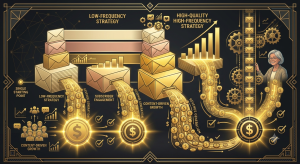
Studies across multiple industries and audience types consistently show that email marketers who email more frequently — two to five times per week — generate significantly more revenue per subscriber than those who email once a week or less. The reason is straightforward: more touchpoints create more opportunities for engagement, trust-building, and conversion. Each email is another chance to deliver value, strengthen the relationship, and present an offer to a subscriber who is ready to act.
At the same time, the research shows that frequency alone does not drive revenue — frequency combined with quality does. Lists that receive daily emails of genuine, specific value consistently outperform lists receiving weekly emails of generic, broad content. Lists that receive daily promotional emails with little accompanying value consistently experience high unsubscribe rates and declining engagement.
The takeaway is not “email as often as possible.” It is “email as often as you can while maintaining the quality and relevance your subscribers expect.”
The Frequency Framework: Finding Your Right Cadence
Rather than prescribing a single universal frequency, here is a framework for determining the right cadence for your specific situation based on three key factors.
Factor 1: Your Content Production Capacity
The most important constraint on your email frequency is your ability to consistently produce emails worth sending. An email that exists only to fill a self-imposed schedule — thin on value, light on substance, clearly written in ten minutes to meet a frequency quota — does more damage to your subscriber relationship than sending nothing at all.
Be honest with yourself about how many genuinely valuable emails you can produce per week. If you can write one excellent email per week, one excellent email per week is your right frequency. If you can produce three, produce three. Consistency and quality matter more than hitting an arbitrary number.
Factor 2: Your Business Model and Goals
Your email frequency should also reflect the role email plays in your overall business model.
If email is your primary revenue channel — your main vehicle for affiliate promotions, product launches, and offer presentations — a higher frequency makes strategic sense. More touchpoints mean more revenue opportunities with an audience that is already warm and trusting.
If email is a secondary channel — primarily used to distribute content and maintain relationships while other channels drive revenue — a lower, more consistent frequency may be more appropriate.
Factor 3: Your Audience’s Expectations and Preferences
The frequency that works best is ultimately determined by what your specific audience values and tolerates — and the only reliable way to know that is through a combination of observation and testing.
Monitor your unsubscribe rates closely as you adjust your frequency. A modest increase in unsubscribes when you move from weekly to twice-weekly is normal and expected — some of your least engaged subscribers will leave, which is not necessarily a bad thing. A dramatic spike in unsubscribes is a signal that either your frequency is too high for your audience or your content quality needs improvement at the new frequency.
The Recommendations by Stage
With that framework in place, here are practical frequency recommendations based on where you are in building your email list and business.

For beginners with a new list (under 500 subscribers): Start with once per week. Your primary goal at this stage is establishing a consistent presence and building the content production habits that will serve you as your list grows. One excellent email per week builds the relationship without overwhelming your capacity as a new email marketer.
Commit to this frequency for at least sixty to ninety days before considering an increase. Consistency matters more than frequency in the early stages — a subscriber who receives one great email per week for three months knows and trusts you far better than one who received three emails one week, nothing for two weeks, and a promotional blast the following week.
For intermediate marketers with a growing list (500 to 5,000 subscribers): Consider moving to two emails per week — one value-focused email and one that blends value with promotion. This cadence gives you more touchpoints without dramatically increasing your content production burden, and the additional promotional opportunity meaningfully increases your revenue potential.
Alternatively, a daily email — five days per week, mirroring a business week cadence — is worth testing if you have the content production capacity and a business model that benefits from daily engagement. Some of the most successful email marketers in the online business space email daily and report that their most engaged, highest-spending subscribers actively welcome the frequency.
For established marketers with large, engaged lists (5,000+ subscribers): At this stage, your frequency decision should be driven primarily by data — your specific open rate trends, unsubscribe patterns, and revenue per email sent at various frequencies. You have enough volume to run meaningful frequency tests and enough historical data to understand how your audience responds to different cadences.
Many established email marketers find that a combination of a consistent weekly or twice-weekly content email and ad hoc broadcast emails tied to specific promotions or events produces the best balance of relationship maintenance and revenue generation.
The Non-Negotiable: Consistency Over Everything
Regardless of what frequency you choose, consistency is the non-negotiable principle that overrides everything else in this discussion.
An inconsistent email schedule — emailing sporadically based on inspiration, available time, or the presence of something to sell — is the single most damaging frequency pattern for subscriber engagement and list health. Subscribers who don’t know when to expect to hear from you develop a passive, disengaged relationship with your emails that is very difficult to reverse.
A predictable schedule — whatever its frequency — creates a form of anticipation that passive consumption never develops. Subscribers who know they’ll hear from you every Tuesday and Thursday open your emails with a different quality of attention than subscribers who receive messages at unpredictable intervals. That anticipation is a meaningful engagement multiplier.
Pick a frequency you can maintain. Announce it to your subscribers so they know what to expect. And then honor that commitment without exception. The consistency you demonstrate in your email schedule signals the same consistency your subscribers can expect in your recommendations, your products, and your business overall.
How to Increase Frequency Without Losing Subscribers
If you’ve been emailing infrequently and want to increase your cadence, the transition needs to be handled carefully to avoid a spike in unsubscribes from subscribers who are accustomed to hearing from you rarely.
The best approach is to announce the change proactively. Send an email explaining that you’re increasing your frequency, why you’re doing it — because you have more value to share — and what subscribers can expect going forward. Give them the opportunity to adjust their expectations before the new cadence begins. This transparency not only reduces unsubscribes from the transition but actually builds trust by demonstrating that you respect your subscribers’ inbox experience enough to communicate openly about it.
Increase gradually rather than abruptly. Moving from monthly to weekly to twice-weekly over a period of a few months is far less disruptive than jumping from monthly to daily overnight.
And when you increase frequency, ensure that the quality of each email justifies the increased presence. The additional emails should feel like a benefit to subscribers — more of something they value — not an intrusion into time they’d rather spend elsewhere.

The Bottom Line
The real answer to “how often should you email your list” is this: as often as you can while consistently delivering genuine value, maintaining a quality standard your audience has come to expect, and honoring a schedule with enough consistency that your subscribers know when to expect you.
For most beginners, that means weekly. For intermediate marketers with growing content capacity, twice weekly. For established marketers willing to commit to the production demands, daily is a legitimate and highly effective strategy — provided the quality is there.
What it never means is emailing only when you have something to sell, emailing sporadically based on inspiration, or defaulting to the lowest frequency possible out of fear of annoying your subscribers. Those approaches produce the disengaged, unresponsive lists that underperform in every metric that matters.
Show up consistently. Deliver value relentlessly. And trust that subscribers who chose to hear from you will continue to welcome your presence in their inbox — as long as what you send continues to be worth receiving.
Before you buy another money-making program, get the free Screenshot Reality Check: seven questions to ask first, plus a short video lesson on what income screenshots leave out. No hype.