How to Write a Welcome Email Sequence That Converts
Heads up: this post may contain affiliate links. If you buy through them, I may earn a commission at no extra cost to you. I only recommend what I’d use myself. Full disclosure
How to Write a Welcome Email Sequence That Converts
Of all the emails you will ever send to your list, none matter more than the ones that arrive in a new subscriber’s inbox during the first week after they opt in. That window — those first few days of a brand new subscriber relationship — is when attention is highest, curiosity is freshest, and the potential for building a lasting, profitable connection is at its absolute peak.
Most online business owners either squander that window entirely — sending a single delivery email and then going silent for weeks — or waste it with a generic, impersonal sequence that reads like it was written by someone who doesn’t actually know or care about their audience. Both approaches leave an enormous amount of value on the table.
A well-crafted welcome email sequence does something entirely different. It takes that window of peak engagement and uses it to build the kind of relationship that turns new subscribers into loyal readers, loyal readers into buyers, and buyers into repeat customers. It is, dollar for dollar, the highest-leverage content you will ever create for your online business.
This post is going to show you exactly how to write one.
What a Welcome Sequence Is — and What It Isn’t
A welcome sequence is an automated series of emails that every new subscriber receives after joining your list — typically beginning immediately at the moment of opt-in and continuing over the following five to ten days.
It is not a sales pitch disguised as a welcome. It is not a series of promotional emails masquerading as value. And it is not something you can write in twenty minutes and expect to perform well.
A welcome sequence is, at its core, a relationship-building tool. Its primary purpose is to make your new subscriber feel that joining your list was one of the best decisions they made today — not because you told them it was, but because the content you delivered in those first few emails proved it.
When that happens — when a new subscriber reads your welcome sequence and thinks “this person genuinely gets what I’m struggling with and has real answers” — you have laid the foundation for a subscriber relationship that will generate revenue for months and years to come.
The Goals of a Welcome Sequence
Before writing a single word of your welcome sequence, it helps to be clear about what you’re trying to accomplish. A well-designed welcome sequence achieves several things simultaneously:
It delivers the promised lead magnet immediately, honoring the commitment you made on your opt-in page and establishing you as someone who follows through. It introduces you and your brand in a way that feels personal, relatable, and trustworthy rather than corporate or generic. It delivers additional standalone value that reinforces the subscriber’s decision to join. It establishes what subscribers can expect from you going forward — how often you’ll email, what topics you’ll cover, and what your relationship with them looks like. And it naturally introduces your core offers in a context that feels like helpful guidance rather than aggressive selling.
All of this can happen across five to seven emails without feeling rushed, forced, or overwhelming — provided each email is focused, well-written, and genuinely useful.
The Five-Email Welcome Sequence Framework
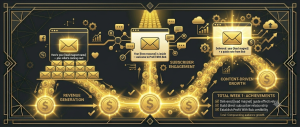
Here is a proven framework for a five-email welcome sequence that accomplishes every goal above. Each email has a clear purpose, a specific structure, and a natural flow that builds from one message to the next.
Email 1: The Delivery Email
Sent: Immediately upon opt-in
This email has one primary job — deliver the lead magnet you promised. Do it immediately, clearly, and without friction. A subscriber who has to search their inbox or wait hours for their free resource starts the relationship with a small but real dose of disappointment. An immediate, clean delivery does the opposite.
Beyond the lead magnet delivery, Email 1 should accomplish three additional things. It should confirm that the subscriber is in the right place — a brief, warm sentence that validates their decision to opt in. It should tell them what’s coming next — a preview of the emails that follow creates anticipation and increases the likelihood that subsequent emails will be opened. And it should include one simple action item — something small and immediately doable that gets the subscriber engaged right away rather than passively receiving.
Keep Email 1 short and focused. This is not the place for your full story or a comprehensive introduction. It’s a clean, warm delivery with a taste of what’s coming.
Subject line examples:
- “Here’s your [lead magnet name] — plus what’s coming next”
- “Your [free resource] is inside — welcome to Profit With Bob”
- “Delivered: your [lead magnet] + a quick note from Bob”
Email 2: The Origin Story
Sent: One day after opt-in
Email 2 is where you introduce yourself properly — not with a dry biography, but through a story. Specifically, the story of why you do what you do and how you arrived at the point of being able to help the subscriber with the problem they’re trying to solve.
Your origin story should accomplish three things. It should make you relatable — sharing a struggle, a turning point, or a realization that your subscriber can see themselves in. It should establish your credibility — not through credentials alone, but through demonstrated experience and the lessons learned along the way. And it should create an emotional connection — giving the subscriber a reason to root for you and, by extension, to trust your guidance.
Keep the story focused and relevant to your subscriber’s situation. This isn’t a comprehensive autobiography — it’s a carefully chosen narrative thread that connects where you’ve been to where your subscriber wants to go.
End Email 2 with a preview of what’s coming in Email 3 to maintain momentum through the sequence.
Subject line examples:
- “How I went from [before state] to [after state] — and what I learned”
- “The turning point that changed everything for me”
- “Why I started Profit With Bob — the honest story”
Email 3: Your Best Value
Sent: Two days after opt-in
Email 3 is the most purely generous email in your welcome sequence. It delivers your single best piece of standalone value — a tip, a strategy, a framework, or an insight that your subscriber can implement immediately and get a result from.
The goal of this email is to create what marketers call a quick win — a small but tangible improvement in your subscriber’s situation that happens because of something you shared. Quick wins are enormously powerful for building trust because they provide concrete proof that your guidance works before you’ve asked for anything in return.
Choose your best, most immediately actionable piece of advice for this email. Not something watered down to tease a paid product — your actual best free insight, shared generously. The paradox of generosity in email marketing is that giving away your best content makes people more likely to buy from you, not less. When subscribers experience the quality of your free advice, their confidence in the value of your paid recommendations increases proportionally.
Subject line examples:
- “The single most important thing I’ve learned about [topic]”
- “This one strategy changed everything — I want you to have it”
- “Your quick win for today — [specific benefit]”

Email 4: The Soft Introduction
Sent: Three to four days after opt-in
Email 4 is where you begin to introduce your monetization — but gently, naturally, and in the context of helpfulness rather than selling.
This is not a hard pitch. It is a recommendation — the kind a trusted friend with relevant expertise would make. Share a resource, a product, or an affiliate offer that genuinely addresses a problem or goal your subscriber has, framed as “here’s something I use and recommend” rather than “here’s something I want you to buy.”
The context matters enormously. Before making the recommendation, briefly remind your subscriber of a challenge they’re likely facing — one your recommended resource directly addresses. Then present the recommendation as the natural solution. This problem-solution framing is not manipulative; it’s helpful. You’re connecting a real problem to a real solution in a context where your subscriber trusts your judgment.
Keep the tone conversational and the pitch soft. A subscriber who feels pushed or sold to at this stage of the relationship will disengage — and disengagement at this point, when the relationship is still forming, can be very difficult to recover from.
Subject line examples:
- “The tool I use every single day for [benefit]”
- “If you’re struggling with [problem], this might help”
- “Something I genuinely recommend for [goal]”
Email 5: The Community and Commitment Email
Sent: Five to six days after opt-in
Email 5 closes the formal welcome sequence and sets the tone for the ongoing relationship. It does three things. It acknowledges the subscriber’s commitment — validating their decision to invest time and attention in building their online business. It outlines what the ongoing relationship will look like — how often you’ll email, what topics you’ll cover, and what your subscribers can consistently expect from you. And it invites engagement — asking a genuine question, encouraging a reply, or pointing subscribers toward your YouTube channel, blog, or community as the next step in deepening the relationship.
The goal of this email is to leave your new subscriber feeling oriented, valued, and genuinely excited about what’s ahead. It should feel like the end of a great first conversation with someone you’ve just met and already know you’re going to learn a lot from.

Subject line examples:
- “What to expect from me going forward — and a quick question”
- “You made it through week one — here’s what’s next”
- “Before I go — one question for you”
The Technical Side: Setting It Up
Once your sequence is written, the technical setup is straightforward in any modern email marketing platform. Create the five emails in your automation builder, set the delivery delays between each email, and connect the sequence to your opt-in form so that every new subscriber is automatically enrolled.
Test the sequence yourself by opting in with a secondary email address and experiencing it as a subscriber would. Check that every link works, every email renders correctly on mobile, and the overall flow feels natural from beginning to end.
Set a reminder to review and refresh your welcome sequence every six to twelve months. Your brand evolves, your offers change, and your understanding of your audience deepens over time. A sequence that was excellent twelve months ago may need updating to reflect who you are and what you offer today.
The Compounding Value of Getting This Right
Here’s the thing about a well-crafted welcome sequence that makes it unlike almost anything else you’ll create for your business. You write it once, and it works for every subscriber who ever joins your list — whether that’s the tenth subscriber this month or the ten-thousandth subscriber two years from now.
Every person who joins your list goes through the same carefully crafted introduction to your brand. Every one of them receives the same generous value, the same authentic story, the same soft introduction to your offers. The sequence compounds in value as your list grows — delivering consistent, high-quality relationship building at a scale that would be impossible to replicate manually.
That is the power of automation applied to relationship building. And it is one of the most meaningful competitive advantages available to any online business owner who takes the time to build it properly.

The Bottom Line
Your welcome sequence is the most important content you will ever create for your email marketing. It sets the tone for every subscriber relationship that follows. It builds the trust that makes future promotions convert. And it does all of this automatically — twenty-four hours a day, seven days a week, for every new subscriber who joins your list.
Write it with care. Deliver genuine value. Tell your real story. Make a soft, honest recommendation. And close it by setting the stage for a relationship that your subscriber will be glad they started.
That is how you write a welcome email sequence that converts — not through manipulation or pressure, but through the simple, powerful combination of generosity, authenticity, and consistency.
Ready to build an email list and welcome sequence that works for your business around the clock? Check out the latest tools, templates, and resources at Profit With Bob — and grab your free resource to get started today. Grab it here.
Free: the Screenshot Reality Check
Seven questions to ask before you spend another dollar on any money-making program, plus a short video lesson on what income screenshots leave out. No income promises, no hype.